What is Redgate Monitor
Published 28 March 2024
Redgate Monitor is a SQL Server and PostgreSQL monitoring and alerting tool, designed to help DBA teams proactively manage any number of instances, whether they are hosted on bare-metal servers, on Virtual Machines, or in the cloud. It is available as a self hosted or a SaaS product.
Self hosted
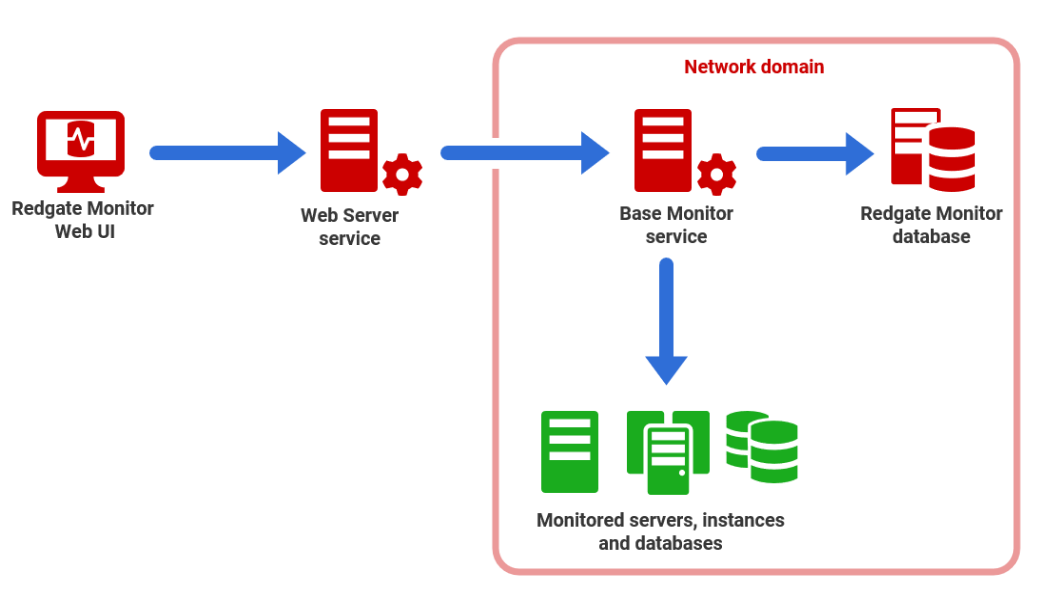
A Base Monitor service continuously monitors the availability, health and performance of monitored servers, instances and databases, collecting and assessing a range of machine, instance and database-level metrics, and associated alert data. This is stored in a SQL Server database, and then presented in a single graphical web interface for review and analysis. Redgate Monitor doesn't require installation of an agent on any of the monitored machines. Instead, Redgate Monitor uses only industry standards, WMI, TDS and SSH, to collect monitoring data from remote computers.
Redgate Monitor SaaS
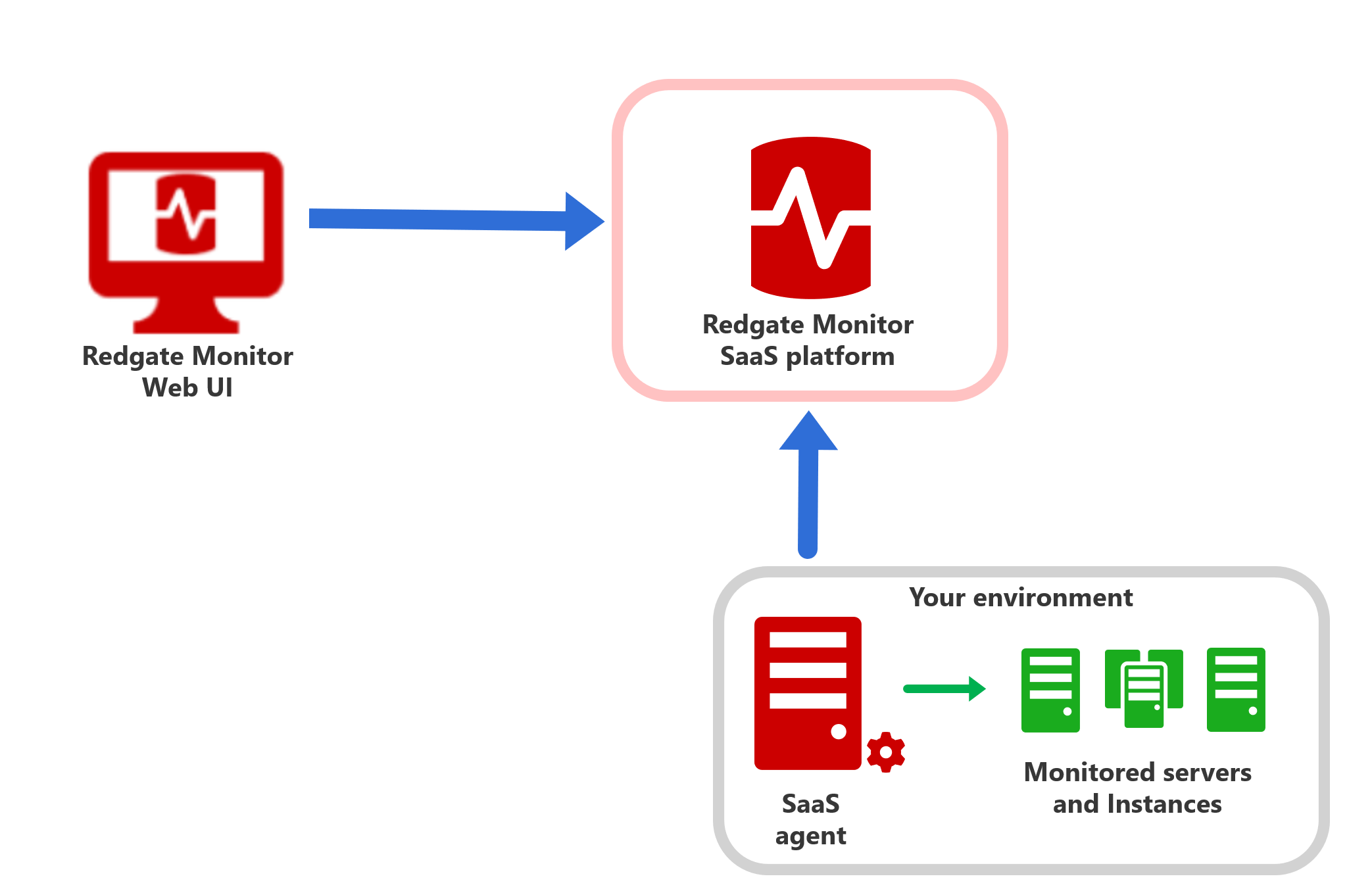
The SaaS offering works in much the same way, with the same methods for collecting data, the main differences are that:
- Redgate maintains, upgrades and runs all the services you need (Web server, base monitor, database) on their own infrastructure (In an customer's individual tenant)
- One or more agents (Which do not need to be installed on monitored machines) collects data (using the same methods as a base monitor) and sends this to the SaaS platform
Which ever hosting method you choose
Redgate Monitor watches the whole estate and raises alerts that warn the DBA of actual or impending problems. It speeds up diagnosis of alerts by summarizing the symptoms of the problem, alongside the SQL text, execution plans and performance statistics for server and user processes running around that time.
By collecting and analyzing metrics over time, Redgate Monitor makes it easier to spot and fix concerns before they become a problem that impacts the running of the database. It reveals disconcerting trends, such as rapid database growth and uses baselines to compare the current server behavior to historical behavior over similar periods.
By almost eliminating the need for routine manual checks on each database service, it enables better quality of service, without the need for ad hoc scripting.
This documentation contains proprietary information and is protected by copyright law.
Copyright © 2026 Red Gate Software Limited. All rights reserved


